The landscape of work has fundamentally shifted. Remote work is no longer a temporary trend but a permanent fixture in the global economy. However, as the geographical barriers to employment dissolve, the competition intensifies. When you apply for a remote position, you are not just competing with local candidates; you are competing with the best talent from across the globe. To secure a role in this environment, your application must go beyond the basics.
Standing out requires a strategic approach that emphasizes your ability to thrive without physical supervision. Employers hiring for remote roles look for a specific set of traits: reliability, technical proficiency, and exceptional communication. In this guide, we will explore how to refine your application to meet these specific demands and prove that you are the ideal candidate for a distributed team.
1. Optimize Your CV for Remote-First ATS Filters
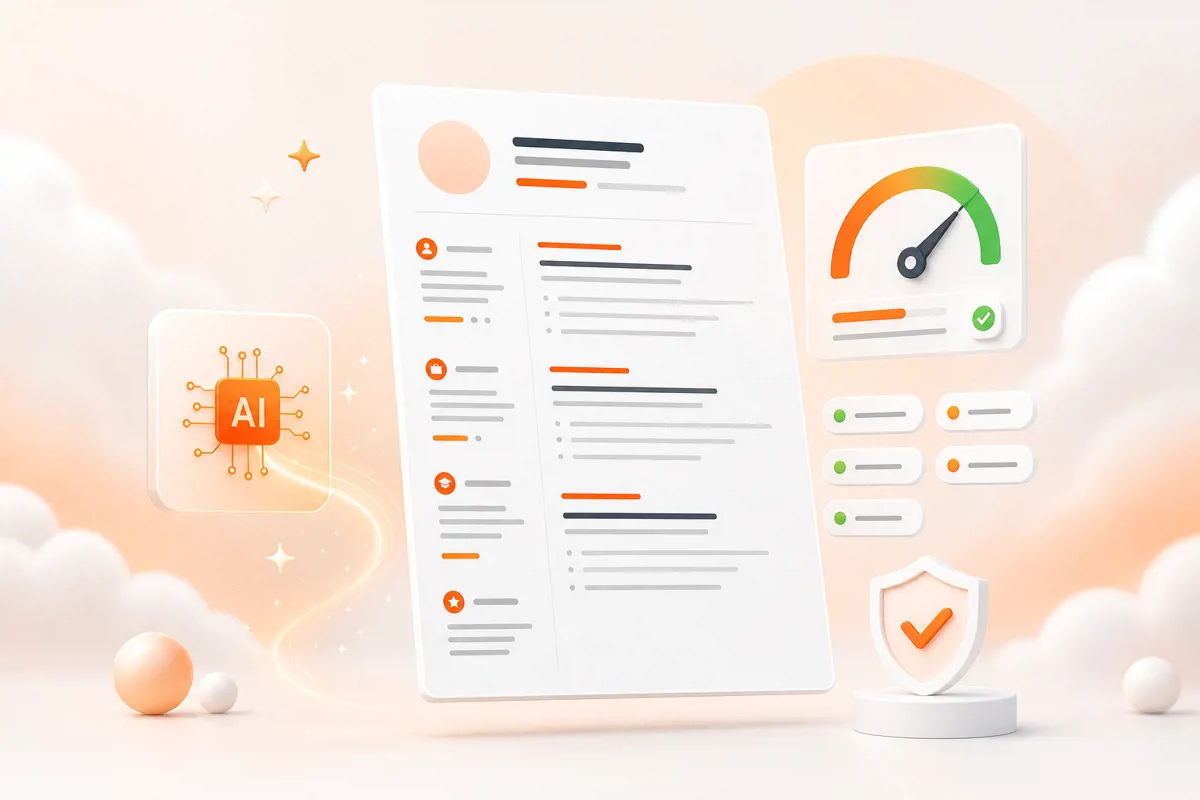
Most remote-first companies receive thousands of applications for a single opening. To manage this volume, they rely heavily on Applicant Tracking Systems (ATS). If your CV isn't optimized for these systems, it may never reach a human recruiter. Remote roles often require specific keywords related to the tools and methodologies used in distributed environments.
Before submitting, it is essential to perform an ATS analysis to ensure your document is readable by these algorithms. Beyond standard industry terms, make sure to include keywords like "asynchronous communication," "distributed teams," and specific software like Slack, Jira, or Trello if you have experience with them. Additionally, the layout of your CV matters just as much as the content. Using ATS-friendly CV templates ensures that your formatting doesn't confuse the system, allowing your skills to shine through clearly.
2. Highlight Remote-Specific Soft Skills
While technical skills are necessary, remote employers prioritize soft skills that ensure a smooth workflow. You must demonstrate that you are a self-starter who can manage time effectively without a manager looking over your shoulder. Consider highlighting the following attributes in your professional summary or skills section:
- Proactive Communication: The ability to provide updates before being asked and clarifying expectations early.
- Time Management: Proving you can prioritize tasks and meet deadlines across different time zones.
- Digital Literacy: Comfort with troubleshooting your own technical issues and adopting new software quickly.
- Cultural Intelligence: The ability to work effectively with teammates from diverse backgrounds and regions.
Instead of just listing these as bullet points, try to weave them into your experience descriptions. For instance, mention how you led a project involving team members in three different time zones, or how you maintained a high output while working autonomously.
3. Focus on Tangible Results and Remote Projects
In a remote setting, managers cannot see you working; they can only see the results of your work. Therefore, your CV should be heavily results-oriented. When describing your previous roles, use the "Action-Result" formula to show the impact you made. This is particularly important when you are describing projects you completed while working from home.
Learning how to write projects on a CV is a game-changer for remote applicants. By detailing the specific problem you solved and the measurable outcome (e.g., "Increased lead generation by 20% through a remote-led social media campaign"), you provide concrete proof of your productivity. If you have previous remote experience, explicitly state it. If you don't, highlight projects where you worked with minimal supervision or collaborated with external partners digitally.
4. Prove Your Value with a Professional Portfolio
For remote roles, "showing" is often more powerful than "telling." A recruiter in a different country needs a way to verify your expertise quickly. This is where a digital portfolio becomes your most valuable asset. A well-organized portfolio acts as a 24/7 representative of your skills, providing the social proof needed to move you to the interview stage.
Using modern portfolio templates allows you to present your work in a clean, professional, and accessible format. Whether you are a developer, designer, writer, or project manager, having a dedicated link where a recruiter can see your past success stories builds immediate trust. Make sure your portfolio is easily accessible from your CV header and your LinkedIn profile to ensure maximum visibility.
5. Mastering the Virtual First Impression
The application process for a remote job often involves more digital touchpoints than a traditional role. Every interaction, from the initial email to the video interview, is a test of your remote communication skills. Pay close attention to the following details:
| Application Element | Remote Excellence Standard |
|---|---|
| Email Correspondence | Clear subject lines, concise body text, and prompt replies. |
| Video Interview Setup | Reliable internet, good lighting, and a professional background. |
| Technical Assignments | Documentation of your process, not just the final file. |
Remember that in the remote world, your digital presence is your professional identity. Ensure that your LinkedIn profile is consistent with your CV and that any public-facing work (like a GitHub repository or a personal blog) reflects the high standards you claim to possess. By treating every digital interaction as a demonstration of your remote-work readiness, you significantly increase your chances of landing the role.
"Remote work is about trust. The more evidence you can provide that you are reliable and productive in a digital environment, the less risk a recruiter sees in hiring you from across the world."
Successfully landing a remote job is a marathon, not a sprint. It requires a refined CV, a strong digital portfolio, and a deep understanding of the tools that make distributed work possible. By focusing on these areas, you move from being just another applicant to being a high-value candidate ready to contribute to a global team from day one.